Featured
Table of Contents
Your aware thinking and awareness of the globe around you. It preserves a systematic sense of self as you connect with your setting, giving you recognition of how you fit into the globe and aiding you keep your personal tale about yourself over time.
They can additionally be positive or neutral aspects of experience that have merely dropped out of aware awareness. Carl Jung's individual unconscious is important because it dramatically shapes your ideas, feelings, and actions, despite the fact that you're typically unaware of its impact. Familiarizing its contents enables you to live more authentically, heal old injuries, and grow mentally and mentally.

Understanding its web content assists you identify why you react highly to specific situations. As an example, a neglected youth rejection may cause unusual anxiousness in social circumstances as a grownup. Complicateds are emotionally charged patterns developed by past experiences. Individuation entails revealing and solving these interior disputes. A complex can be activated by scenarios or interactions that resonate with its psychological theme, causing an overstated response.
Typical examples include the Hero (the endure lead character who conquers difficulties), the Mother (the nurturing guard), the Wise Old Guy (the mentor figure), and the Darkness (the hidden, darker aspects of character). We experience these archetypal patterns throughout human expression in ancient misconceptions, spiritual texts, literary works, art, fantasizes, and modern narration.
Why Telehealth Trauma Therapy Works
This aspect of the archetype, the purely biological one, is the appropriate issue of scientific psychology'. Jung (1947) thinks symbols from various societies are usually really similar since they have actually arised from archetypes shared by the whole human race which belong to our cumulative unconscious. For Jung, our primitive past comes to be the basis of the human subconscious, routing and influencing present actions.
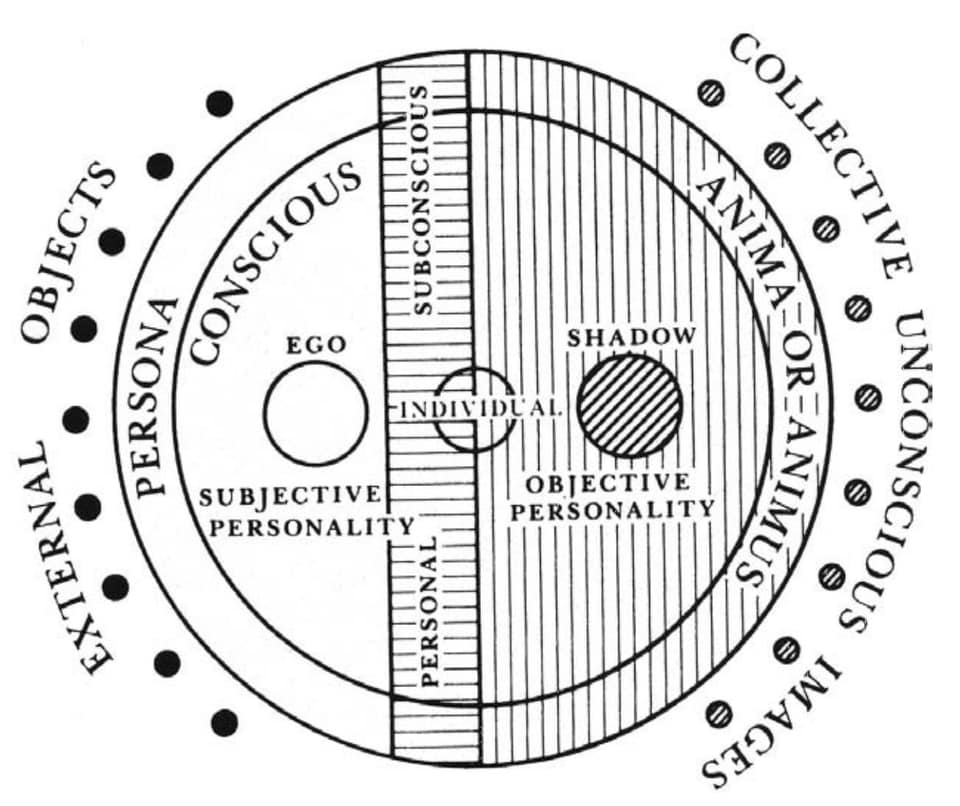
Jung classified these archetypes the Self, the Persona, the Shadow and the Anima/Animus. The personality (or mask) is the external face we offer to the globe. It hides our real self and Jung explains it as the "consistency" archetype. This is the general public face or duty a person presents to others as somebody various from that we actually are (like an actor).
The term stems from the Greek word for the masks that old actors used, signifying the roles we play in public. You could consider the Personality as the 'public relationships representative' of our vanity, or the packaging that presents our ego to the outdoors. A well-adapted Persona can considerably add to our social success, as it mirrors our true personality type and adapts to various social contexts.
An instance would certainly be a teacher who continually deals with every person as if they were their students, or somebody that is excessively authoritative outside their work atmosphere. While this can be annoying for others, it's even more troublesome for the private as it can cause an incomplete understanding of their complete character.
Body-Based Components in Trauma Therapy
This generally causes the Persona encompassing the extra socially appropriate characteristics, while the less preferable ones enter into the Darkness, another crucial part of Jung's individuality theory. Another archetype is the anima/animus. The "anima/animus" is the mirror image of our organic sex, that is, the unconscious feminine side in males and the manly tendencies in ladies.
For instance, the phenomenon of "love prima facie" can be discussed as a man forecasting his Anima onto a female (or vice versa), which brings about an instant and extreme tourist attraction. Jung acknowledged that so-called "manly" traits (like freedom, separateness, and hostility) and "womanly" qualities (like nurturance, relatedness, and compassion) were not confined to one gender or remarkable to the various other.
Outcome Factors for Trauma therapy
This is the animal side of our personality (like the id in Freud). It is the source of both our innovative and destructive powers. In line with transformative concept, it might be that Jung's archetypes mirror tendencies that when had survival value. The Darkness isn't simply adverse; it offers depth and balance to our personality, reflecting the concept that every aspect of one's personality has a countervailing counterpart.
Overemphasis on the Identity, while overlooking the Shadow, can lead to a superficial individuality, busied with others' perceptions. Shadow elements typically materialize when we forecast done not like traits onto others, working as mirrors to our disowned elements. Involving with our Shadow can be difficult, however it's crucial for a balanced character.
Studies Validating Trauma Therapy Outcomes
This interaction of the Identity and the Darkness is typically checked out in literature, such as in "Dr. Jekyll and Mr. Hyde", where characters face their dual natures, further highlighting the engaging nature of this facet of Jung's theory. Ultimately, there is the self which gives a feeling of unity in experience.
That was definitely Jung's belief and in his publication "The Obscure Self" he argued that much of the problems of contemporary life are caused by "guy's progressive alienation from his natural structure." One facet of this is his views on the relevance of the anima and the bad blood. Jung suggests that these archetypes are items of the collective experience of males and females cohabiting.
For Jung, the result was that the complete psychological development both sexes was threatened. Together with the prevailing patriarchal society of Western human being, this has actually resulted in the decrease of feminine top qualities completely, and the control of the character (the mask) has elevated insincerity to a way of living which goes undisputed by millions in their everyday life.
Each of these cognitive functions can be shared largely in a withdrawn or extroverted form. Let's dive deeper:: This dichotomy has to do with how individuals choose.' Thinking' individuals choose based on reasoning and unbiased factors to consider, while 'Really feeling' individuals make decisions based on subjective and personal values.: This duality concerns how people view or collect information.

Latest Posts
OCD in the Workplace
Clinical Trust during Psilocybin-Assisted Psychotherapy
Practising as an EMDR Specialist